

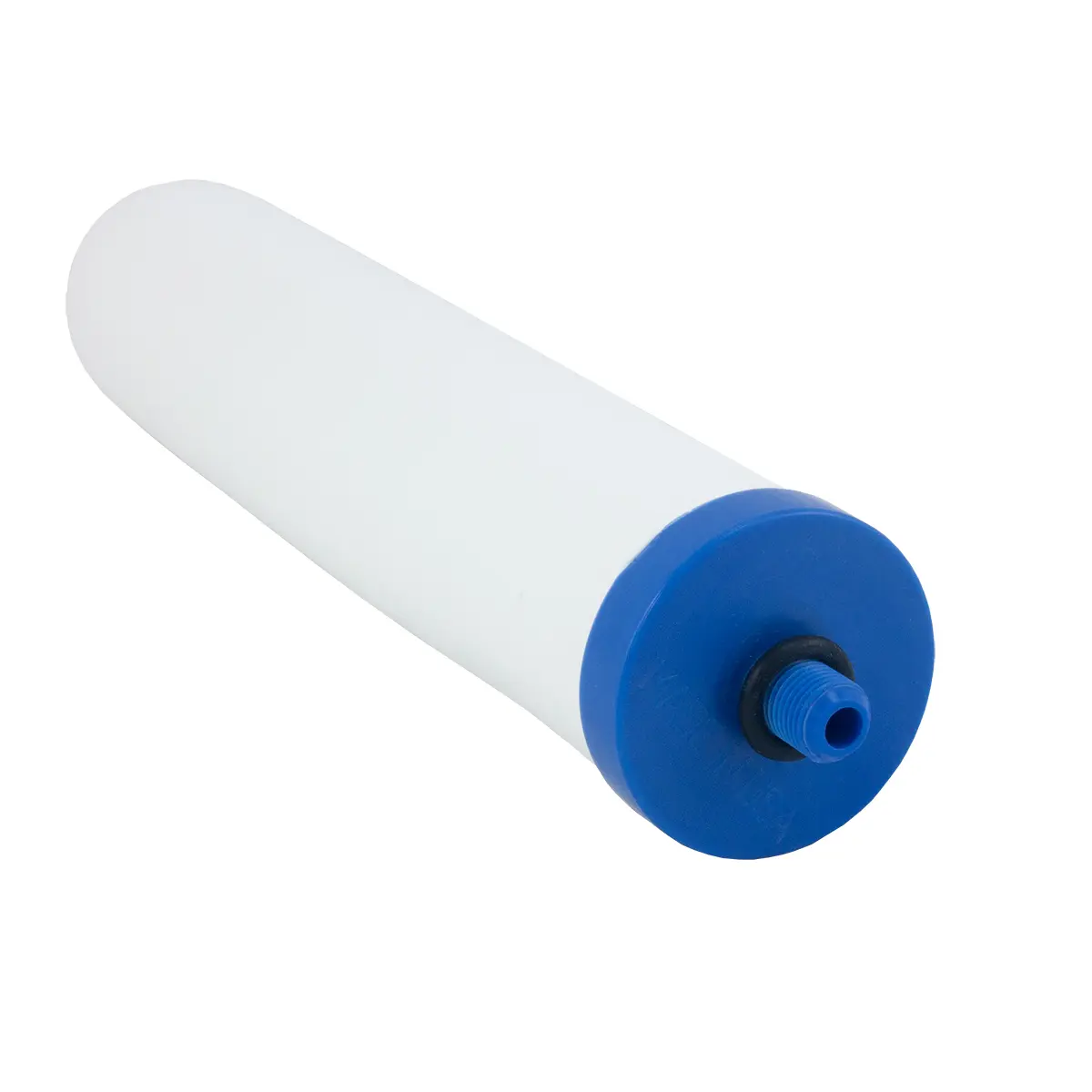
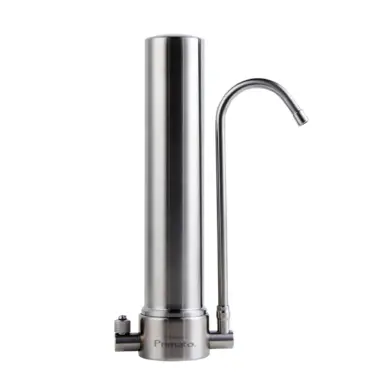
CeraMetix® is a replacement filter that purifies water in two stages. The first stage features the patented CeraCyl® and the second stage the equally patented AquaMetix®. CeraCyl® is a ceramic material (similar to porcelain) impregnated with bacteriostatic silver, designed to trap particles smaller than 0.2 μm (the average diameter of a human hair is 100 μm). It can trap bacteria and cysts to provide you with clean and safe water. The silver gives the filter bacteriostatic properties that prevent cell division and allow it to self-sterilise. As the ceramic filter is quite ‘fine-meshed’, it is to be expected that water flow will decrease over time. When it becomes sufficiently clogged, simply rub it gently under running water with a kitchen sponge (using the soft side). This will remove all the sludge and rust that has accumulated on the outside of the shell and restore the water flow to normal levels. As the filter is quite compact, it allows the water to remain in the AquaMetix® in the second stage for longer, thereby ensuring it is purified even more effectively of harmful substances.
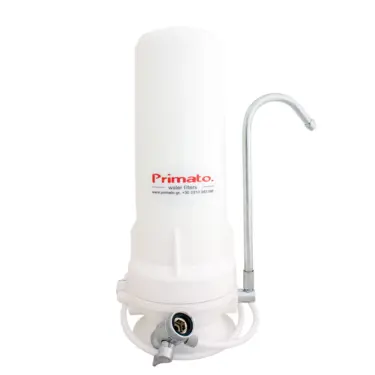
Suitable for all HCP, HCS, HIP, HIP DUO and HCP DUO models.
- Nominal pore size 0.2 μm, retention efficiency >99.9%. In practical terms, this means that out of 100 particles with a diameter of 0.2 μm attempting to pass through the filter, >99.9 per cent will be blocked.
- Absolute filtration efficiency at 0.5 μm. This means that out of 100 particles with a diameter of 0.5 μm attempting to pass through the filter, none will succeed.
- 100 per cent cyst removal
- 99.9999% reduction in pathogenic bacteria
- You can clean the filter with a soft sponge to ensure better water flow and extend its lifespan.
- Infused with silver, which acts as a bacteriostatic agent and allows the filter to self-sterilise.
Aquametix®, located in the second stage, is a patented combination of two types of activated carbon with zeolite. The zeolites are bonded to the activated carbon using special polymers to create an extremely compact and porous water filter. It is manufactured in the USA using raw materials that meet the highest FDA standards, cutting-edge technologies and unrivalled performance.
CeraMetix® is the only composite filter that reduces cysts, pathogens, chlorine, bacteria, microplastics, cryptosporidia, fluorides, lead, heavy metals, volatile organic compounds (VOCs), pharmaceutical compounds and drug residues, arsenic, chromium, nitrates, chloramines, herbicides, glyphosate, trihalomethanes, MTBE, aluminium, iron, mercury, nickel, zinc, industrial residues, turbidity and a large number of hazardous elements with a single cartridge.
Capabilities of CeraMetix®
- Chlorine reduction. BIOLAB certification (a laboratory in Greece specialising in water, accredited by the Hellenic Accreditation System and the National Organisation for Medicines). Certificate Number: 50922
TESTS METHOD RESULT REDUCTION Residual Chlorine (2 mg/L) XN-30 In-house method based on EPA 330.5 0.06 mg/L 97% Residual Chlorine (4 mg/L) XN-30 In-house method based on EPA 330.5 0.08 mg/L 98% - Nitrate reduction. ENVIROTEK certification based on ANSI/NSF Standard 53 and ANSI/NSF Standard 42. EPA ID #NJ01298 NJ DEP ID #08012.
CONCENTRATION IN WATER POST-FILTER CONCENTRATION REDUCTION 27.5 mg/L 2.1 mg/L 92.4% - Reduction in nitrate levels as per certification by BIOLAB. Certificate No.: 50922
TESTS METHOD RESULT REDUCTION Nitrates – NO₃ (10 mg/L) XN 08 In-house APHA 4500-NO3- 1.99 mg/L 80.1% Nitrates – NO₃ (50 mg/L) XN 08 In-house APHA 4500-NO3- 2.65 mg/L 94.7% Nitrates – NO₃ (80 mg/L) XN 08 In-house APHA 4500-NO3- 20.71 mg/L 74.11% - Lead reduction in accordance with certification from BIOLAB. Certificate No.: 50922
TESTS METHOD RESULT REDUCTION Lead – Pb (10 μg/L) XN 15 In-house method based on 3111 A&B 1.87 μg/L 81.3% Lead – Pb (20 μg/L) XN 15 In-house analysis based on 3111 A&B 1.97 μg/L 90.15 - Lead reduction in accordance with ENVIROTEK certification based on ANSI/NSF Standard 53 and ANSI/NSF Standard 42. EPA ID #NJ01298 NJ DEP ID #08012.
CONCENTRATION IN WATER POST-FILTER CONCENTRATION REDUCTION 148 μg/L 1.93 μg/L 98.7% - Arsenic reduction as per certification by BIOLAB. Certificate No.: 50922
TESTS METHOD RESULT REDUCTION Arsenic – As (5 μg/L) XN 15 In-house based on 3111 A&B <1 μg/L (below the laboratory’s detection limit) 100% Arsenic – As (10 μg/L) XN 15 In-house method based on 3111 A&B <1 μg/L (below the laboratory’s detection limit) 100% Arsenic – As (20 μg/L) XN 15 In-house method based on 3111 A&B <1 μg/L (below the laboratory’s detection limit) 100% - Arsenic reduction in accordance with ENVIROTEK certification based on ANSI/NSF Standard 53 and ANSI/NSF Standard 42. EPA ID #NJ01298 NJ DEP ID #08012.
CONCENTRATION IN WATER POST-FILTER CONCENTRATION REDUCTION 302 μg/L 14.6 μg/L 95.2% - Chromium reduction in accordance with certification from BIOLAB. Certificate No.: 50922
TESTS METHOD RESULT REDUCTION Chromium – Cr (10 μg/L) XN-15 In-house APHA 3113 A&B AAS <5 μg/L (below the laboratory’s detection limit) 100% Chromium – Cr (50 μg/L) XN-15 In-house method based on APHA 3113 A&B AAS <5 μg/L (below the laboratory’s detection limit) 100% Chromium – Cr (80 μg/L) XN-15 In-house method based on APHA 3113 A&B AAS <5 μg/L (below the laboratory’s detection limit) 100% - Chromium reduction in accordance with ENVIROTEK certification based on ANSI/NSF Standard 53 and ANSI/NSF Standard 42. EPA ID #NJ01298 NJ DEP ID #08012.
CONCENTRATION IN WATER POST-FILTER CONCENTRATION REDUCTION 304 μg/L 1.70 μg/L 99.4% - Reduction of heavy metals as certified by ENVIROTEK in accordance with ANSI/NSF Standard 53. EPA ID #NJ01298 NJ DEP ID #08012.
PARAMETER CONCENTRATION IN WATER CONCENTRATION AFTER FILTERING REDUCTION Aluminium 200 μg/L 2.13 μg/L 98.9% Antimony 6 μg/L 0.18 μg/L 97% Arsenic 302 μg/L 14.60 μg/L 95.2% Beryllium 50 μg/L 0.94 μg/L 98.% Bismuth 50 μg/L 0.94 μg/L 98.% Cadmium 30 μg/L 0.29 μg/L 99% Chromium 304 μg/L 1.70 μg/L 99.4% Copper 3010 μg/L 14.93 μg/L 99.5% Iron 3020 μg/L 63.18 μg/L 97.9% Lead 148 μg/L 1.93 μg/L 98.7% Manganese 1010 μg/L 24.69 μg/L 97.6% Mercury 6 μg/L 0.04 μg/L 99.4% Nickel 100 μg/L 0.70 μg/L 99.3% Selenium 104 μg/L 0.81 μg/L 99.2% Zinc 104 μg/L 0.81 μg/L 99.2% - Fluorides: 92% of all types – fluorosilicic acid, hydrofluorosilicic acid, sodium fluorosilicate, sodium fluoride (ENVIROTEK certification)
- Reduction in Volatile Organic Compounds (VOCs) from 95.8% to 99.7% according to ENVIROTEK certification, based on water testing carried out in accordance with NSF Standard 53. EPA ID #NJ01298 NJ DEP ID #08012. ‘VOCs’ contain chemicals derived from both human activity and nature. They are usually found in wells or pipework. Some VOCs include pesticides, herbicides and insecticides that enter groundwater following their application. Other volatile organic compounds enter groundwater through industrial use or via sewage discharges.
Some of the VOCs that are being reduced include the following: dichlorodifluoromethane, chloromethane, vinyl chloride, bromomethane, chloroethane, trichlorofluoromethane, 1,1-dichloroethene, methylene chloride, trans-1,2-dichloroethene, MTBE, 1,1-dichloroethane, cis-1,2-dichloroethene, 2,2-dichloropropane, bromochloromethane, chloroform, Carbon tetrachloride, 1,1,1-trichloroethane, 1,1-dichloropropene, benzene, 1,2-dichloroethane, trichloroethene, dibromomethane, 1,2-dichloropropane, bromodichloromethane, cis-1,3-dichloropropene, toluene, trans-1,3-dichloropropene, tetrachloroethene, 1,1,2-trichloroethane, Chlorodibromomethane, 1,3-dichloropropane, ethylbenzene, chlorobenzene, 1,1,1,2-tetrachloroethane, m-xylene, o-xylene, styrene, bromoform, isopropylbenzene, n-Propylbenzene, Bromobenzene, 1,1,2,2-Tetrachloroethane, 1,3,5-Trimethylbenzene, 2-Chlorotoluene, 1,2,3-Trichloropropane, Dichlorodifluoromethane, chloromethane, vinyl chloride, bromomethane, chloroethane, trichlorofluoromethane, 1,1-dichloroethene, methylene chloride, trans-1,2-dichloroethene, 4-Chlorotoluene, tert-Butylbenzene, 1,2,4-Trimethylbenzene, sec-Butylbenzene, 4-Isopropyltoluene, 1,3-Dichlorobenzene, 1,4-Dichlorobenzene, n-Butylbenzene, 1,2-Dichlorobenzene, Hexachlorobutadiene, 1,2,4-Trichlorobenzene, Naphthalene, 1,2,3-Trichlorobenzene - Reduction in pesticide levels from 63.6% to 99.9% as certified by ENVIROTEK following water testing carried out in accordance with NSF Standard 53. EPA ID #NJ01298 NJ DEP ID #08012. Specifically, the pesticides tested were as follows: 4,4°-DDD, 4,4’-DDE, 44’-DDT, Alachlor, Aldrin, Alpha-BHC, Ametryn, Atraton, Atrazine, Beta-BHC, Bromacil, Carboturan, Chlordane, Chlorneb, Chlorobenzilate, Chlorothalonil, Chlorprophane, Chlorpyrifos, Cyanizene 1, Delta-BHC, Dichlorvos, Dieldrin, Diphenamid, Disulfoton, Endosulfan sulphate, Endrin, Endrin aldehyde, Endrin ketone, Endusulfan I, Endusulfan II, Ethoprop, Fenamiphos, Fenarimol, Fluoridone, Gamma-BHC (Lindane) 2.2 0.8 63.6, Glyphosate, Heptachlor, Heptachlor Epoxide, Methoxychlor, Molinate, PCBs, Prometron, Simazine, Toxaphene.
We list the most important ones here: SUBSTANCE CONCENTRATION IN WATER CONCENTRATION AFTER FILTERING REDUCTION Glyphosate (commonly known as Roundup) 790 μg/L 0.9 μg/L 99.9% Atrazine 9.1 μg/L 1.4 μg/L 84.6% 4,4°-DDD 50.2 μg/L 1.2 μg/L 97.6% 4,4’-DDE 50.1 μg/L 1.5 μg/L 97% 44’-DDT 50.2 μg/L 1.3 μg/L 97.4% - Reduction in herbicides from 92.2% to 99.7% according to certification by ENVIROTEK, based on water testing carried out in accordance with NSF Standard 53. EPA ID #NJ01298 NJ DEP ID #08012. Specifically, the herbicides tested were as follows: Dalapon, Dicamba, Dinosep, Dichlorprop, 2,4-D, Pentachlorophenol, Picoram, 2,4,5-T, 2,4,5-TP, Silvex, 2,4-DB, Bentazom, DCPA, Quinclorac, Aciflurfen.
- Drug compounds and pharmaceutical preparations ranging from 95.7% to 98.1%, as certified by ENVIROTEK following water testing conducted in accordance with NSF Standard 401. EPA ID #NJ01298 NJ DEP ID #08012. Specifically, the pharmaceutical preparations tested are as follows: Acetaminophen, Caffeine, Carbamazepine, Ciprofloxacin HC, Erythromycin USP, Sulfamethoxazole, Trimethoprim, Bisphenol A, Diclofenac Sodium, 4-para-Nonylphenol, 4-lert-Octylphenol, Primidone, Progestrone, Gemfibrozil, Ibuprofen, Naproxen Sodium, Triclosan.
- Reduction in semi-volatile organic compounds from 96.5% to 98.4% according to certification by ENVIROTEK, based on water testing carried out in accordance with NSF Standard 53. EPA ID #NJ01298 NJ DEP ID #08012. Semi-volatile organic compounds (SVOCs) are a subgroup of VOCs (Volatile Organic Compounds) that tend to have a higher molecular weight and a higher boiling point. SVOCs are a cause for concern due to their abundance in indoor environments and their potential to cause adverse effects on human health. Specifically, the semi-volatile organic compounds analysed were as follows: Acenaphthylene, Anthracene, Benz[a]anthracene, Benzo[b]fluoranthene, Benzo[k]fluoranthene, Benzo[a|pyrene, Benzo[g.h,i]perylene, Butylbenzylphthalate, Carboxin, 2-Chlorobiphenyl, Chrysene, Cycloate, Dacthal (DCPA), Diazinon, Dibenz{a,hjanthracene, Di-n-butyl phthalate, 2,3-dichlorobiphenyl, Diethyl phthalate, Di(2-ethylhexyl)adipate, Di(2-ethylhexyl)phthalate, Dimethyl phthalate, EPTC, Fluorene, 2,2',3,3',4,4',6-Heptachlorobiphenyl, Hexachlorobenzene, 2,2',4,4',5,6'-Hexachlorobiphenyl, Hexachlorocyclohexane, alpha, Hexachlorocyclohexane, beta, Hexachlorocyclohexane, delta, Hexachlorocyclopentadiene, Hexazinone, Indeno[1,2,3,c,d]pyrene, Isophorone, Merphos, methyl paraoxon, norflurazon, 2,2', 3,3', 4,5', 6,6'-octachlorobiphenyl, pebulate, 2,2', 3', 4,6'-pentachlorobiphenyl, Pentachlorophenol, Phenanthrene, cis-Permethrin, trans-Permethrin, Prometon, Prometryn, Pronamide, Propachlor, Propazine, Triademefon, 2,4,5-Trichlorobiphenyl, Tricyclazole, Trifluralin, Vernolate.
- Microplastics 99%
- Chloramines: 90.3% ENVIROTEK certification based on ANSI/NSF Standard 42. Some local authorities, instead of using chlorine to disinfect water, use chloramine (a combination of chlorine and ammonia). The reason is that chloramines remain active in water for longer than chlorine. In other words, if drinking water has to travel a long distance before reaching your tap, then chloramine is preferable to chlorine. It also reduces the combination of chloramine, monochloramine and ammonia.
- > 98% THMs (Trihalomethanes). Trihalomethanes (THMs) in water are by-products of chlorination. The most common compounds monitored by water supply authorities are chloroform, bromoform, dibromochloromethane and bromodichloromethane.
- Reduction of MTBE (methyl tert-butyl ether) by 97.6 per cent. ENVIROTEK certification. Methyl tert-butyl ether (MTBE) is a volatile organic compound added to petrol to reduce levels of carbon monoxide and ozone in vehicle emissions. In California, the addition of MTBE has improved air quality by reducing vehicle emissions by 14 per cent at a state level. Unfortunately, however, in recent years methyl tert-butyl ether has also begun to appear in water.
- It effectively reduces industrial residues, toxic substances, turbidity, suspended particles, sludge, rust, soil and various other substances harmful to the body.
- Reduction of Radionuclides
- It does not remove minerals and trace elements essential for the body.
- It significantly improves the taste and smell of the water.
- It must be replaced at least once a year or every 2,300 litres.
What is activated carbon?
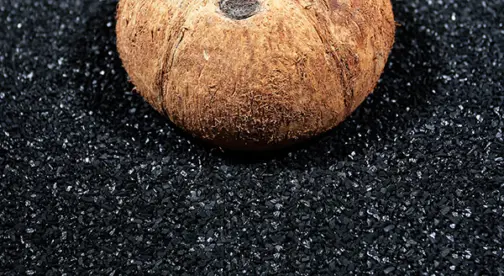
The activated carbon used in Aquametix® is a completely natural product that looks like a fine, odourless, tasteless and non-toxic black powder. It can be produced from peat, bamboo, charcoal, wood, sawdust, coconut husks, olive pits and other sources. It is heated in a controlled environment under vacuum to acquire its characteristic porous surface. These microscopic holes, or pores, can increase the surface area of the carbon from 500 to 1,500 m²/g. As a result of this treatment, it is able to adsorb various substances that come into contact with it, whether in liquid or gaseous form, in quantities many times its own weight. One cubic centimetre of activated carbon has the same surface area as a surface measuring 50,000 square metres. Naturally, activated carbon produced from coconut shells is the most eco-friendly and environmentally friendly option! Aquametix® combines two types of activated carbon with zeolite.
How zeolite helps improve water quality
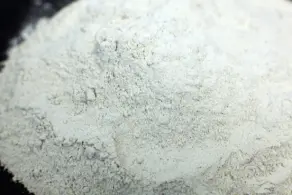
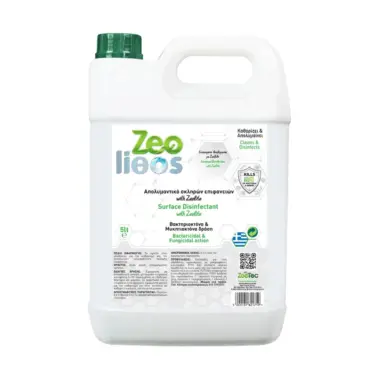
One of the most valuable natural products, with numerous beneficial properties for both humans and the environment, is the mineral zeolite. The crystalline structure of natural zeolite gives it unique beneficial properties that are relevant to its use in purifying drinking water. Natural zeolite absorbs chlorides, iron and manganese, as well as heavy and toxic metals such as silver, mercury, nickel, chromium, cobalt, antimony, arsenic and cadmium. The ion-exchange properties of zeolite help to remove salts from water, resulting in water softening and the adjustment of its pH towards neutral. Zeolite is a 100% natural, insoluble, durable product with antibacterial properties.


Reviews
There are no reviews yet.