

Description
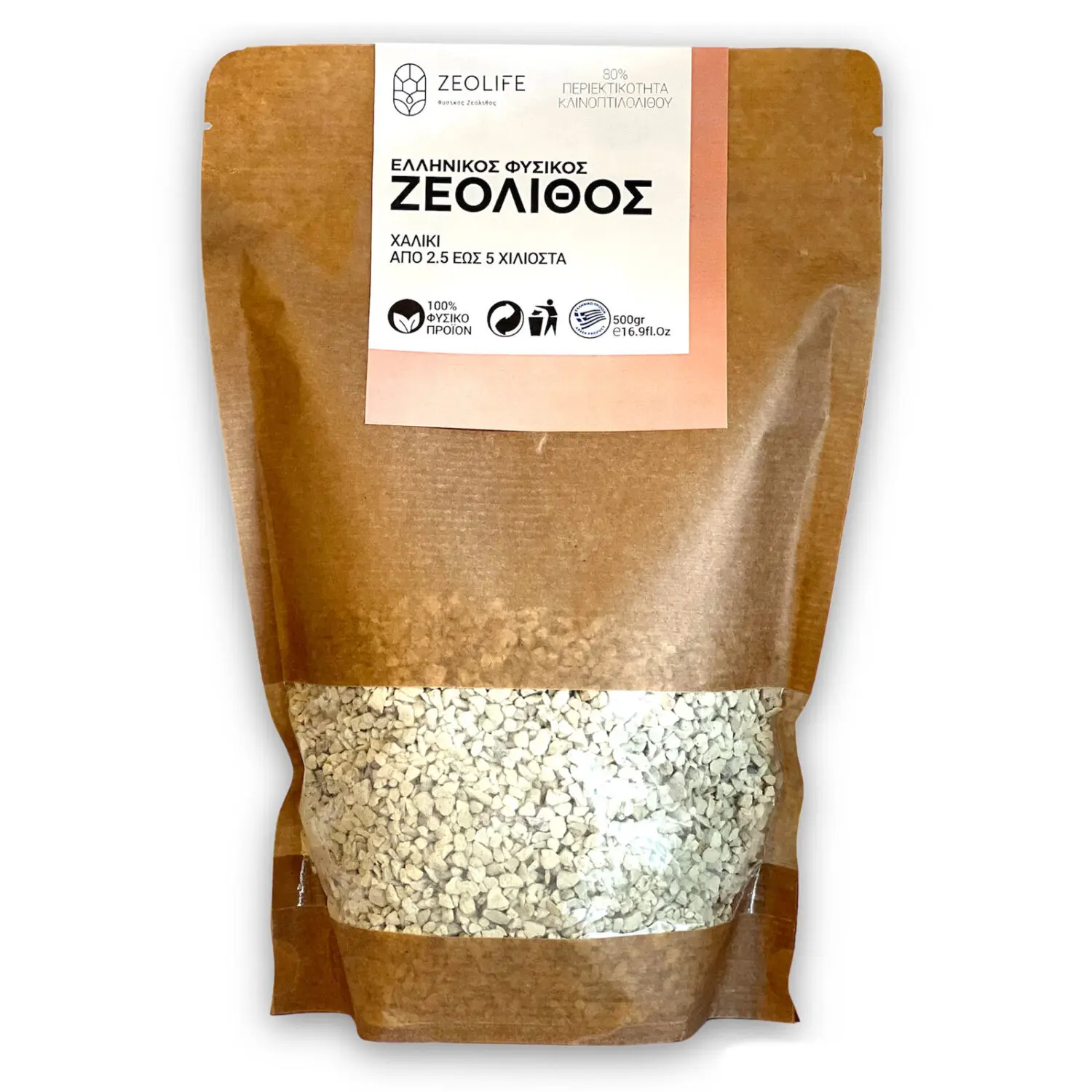
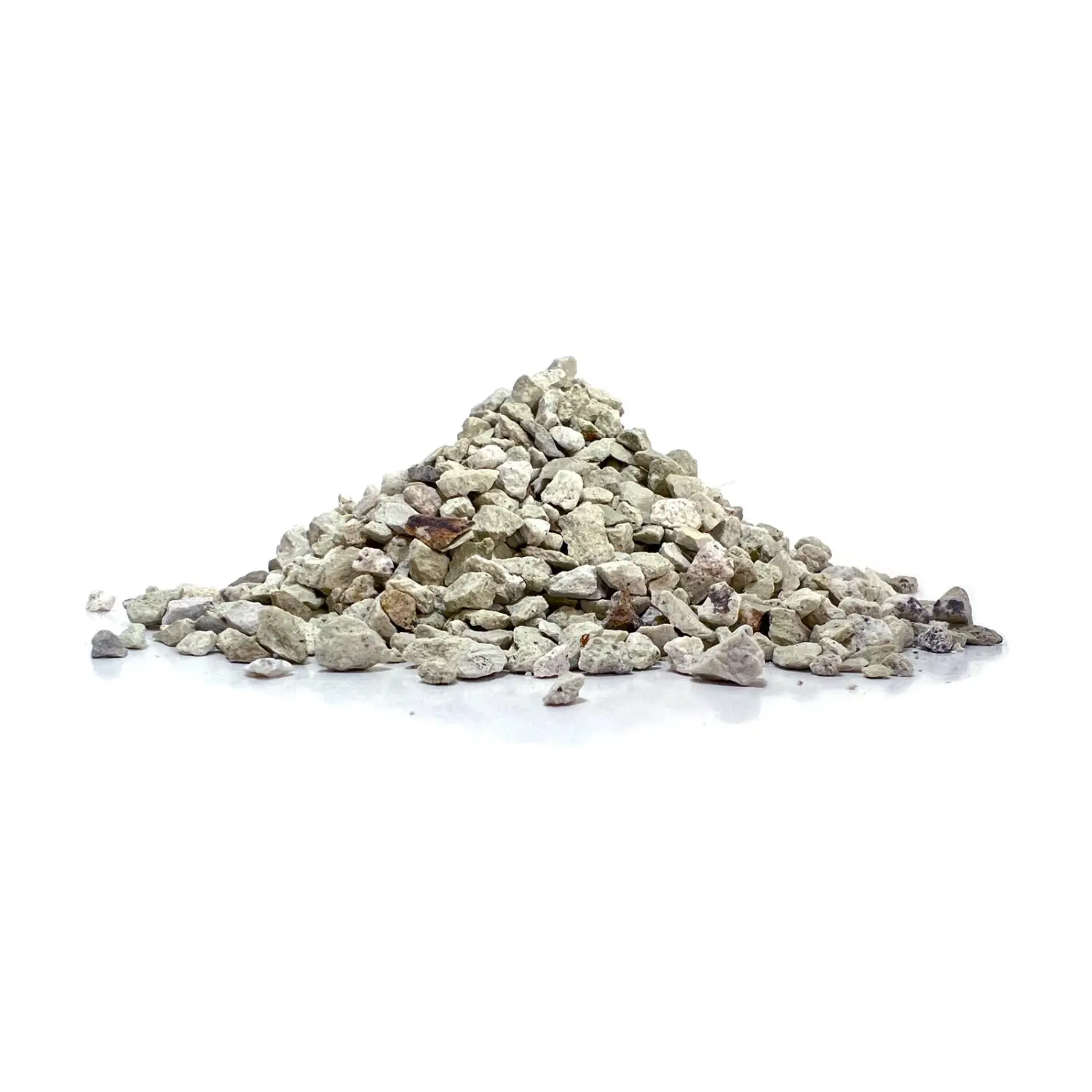
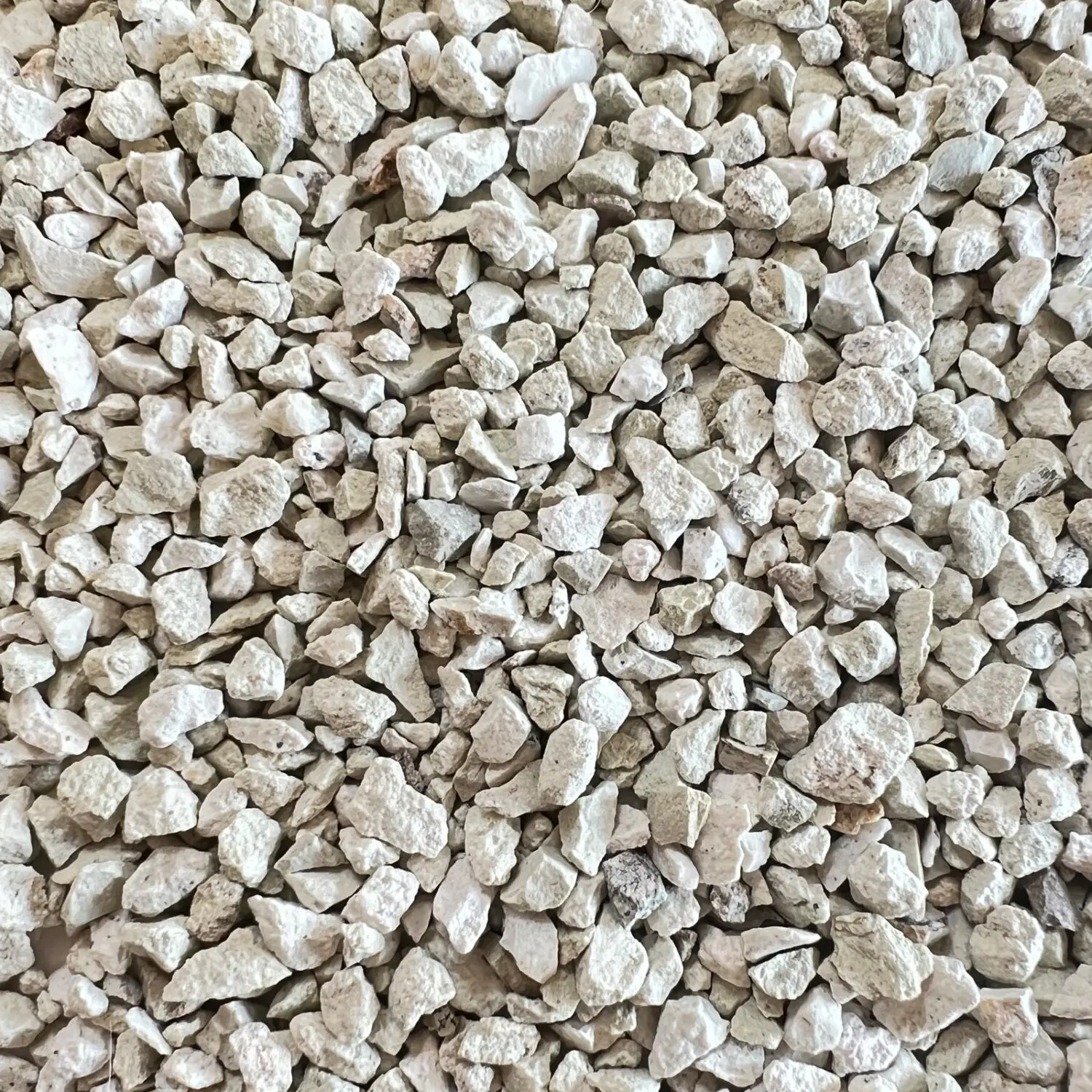
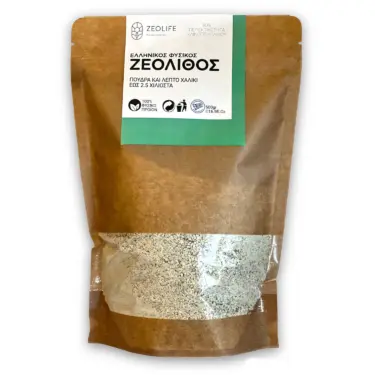
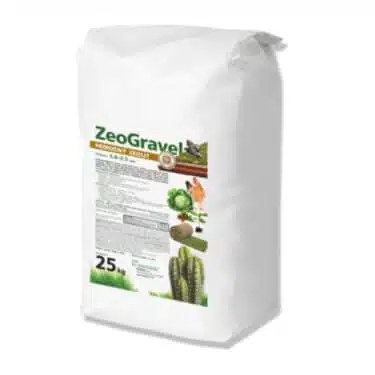
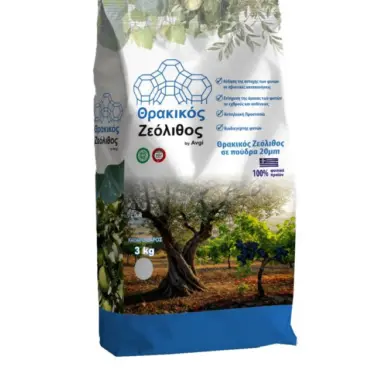
Greek zeolite, 2.5 to 5 millimetres – gravel, with a clinoptilolite content of at least 80 per cent. Ideal particle size distribution of certified, natural, Greek zeolite, for incorporation into large-scale crops, such as trees and fields. In industry, it is used for environmental cleaning and management. Packaged in 500-gram packs.
Applications
In agriculture
Zeolite is usually applied by incorporating it into the soil at rates of 300 to 450 kilograms per stremma, depending on the soil type and its particle size distribution (particle size).
See below for the recommended dosage based on soil composition and the size of the crop
Small-scale crops (vegetable patches, vine-trained plants, gardens, lawns, pots and planters, and other small-scale crops)
- Light soil
- Medium-textured soil:
- Heavy soil:
Large-scale crops (trees, maize, cotton and other large-scale crops)
- Light soil
- Medium-textured soil:
- Heavy soil:
A total quantity of 300 to 450 kilograms per stremma is required to maximise its contribution to increased production. Its beneficial effect is long-lasting because zeolite does not break down like other materials.
Characteristics
- 100% eco-friendly
- 100% compatible with organic farming
- Acts as a molecular filter
- Manages soil nutrients and water
- Balances pH
- Cleanses the soil of heavy metals, toxins and free radicals
- Increases the yield and quality of produce
- Delivers lasting results as it does not degrade, decompose or change its composition
- It enhances resistance to diseases and pests
- It combines perfectly with active microorganisms, enhancing their action
- It can be used as a growing medium to aid the development of hydroponic crops in Mediterranean conditions, for vegetables, flowers and aromatic plants
- It helps to reduce the amount of fertiliser used
- It prevents the growth of fungi
- It protects plants from stress in adverse conditions
Read more about the use of zeolite in agriculture on our information website
Zeolite in industry
Zeolite contributes to a cleaner and safer environment in countless ways. It is used to enrich the atmosphere with oxygen due to its selective ability to absorb nitrogen. It is used to clean up the seas from oil spills. As a redox catalyst, it can remove atmospheric pollutants, such as engine exhaust gases and CFCs, which cause ozone depletion. Adding zeolite to cement in the construction sector significantly reduces carbon dioxide emissions. It also improves and purifies drinking water by filtering out all substances hazardous to humans.
Natural zeolite has been used to protect against nuclear radiation leaks, such as at Fukushima and Chernobyl. Due to its ability to bind heavy metals, zeolite is often applied in large quantities in areas affected by radiation leaks. It binds the radioactive material, which is then collected and encapsulated in glass and cement.
In industry, it is used in filters to capture carbon dioxide and other harmful compounds. Zeolite can also be used to filter liquid industrial waste, by binding various toxic and radioactive ions, as well as in the recycling of water from industrial processes. Most importantly, however, after use and with appropriate treatment, its properties can be restored so that it can be reused.
Read more about the industrial use of zeolite on our information website


Excellent
Excellent
Automatically translated from Greek · Show original