
Pine
Ingredient
Pine
Benefits:NaturalPlant
The scent of the Greek summer — and the resin that has given retsina its flavour for two and a half thousand years.
What is pine?
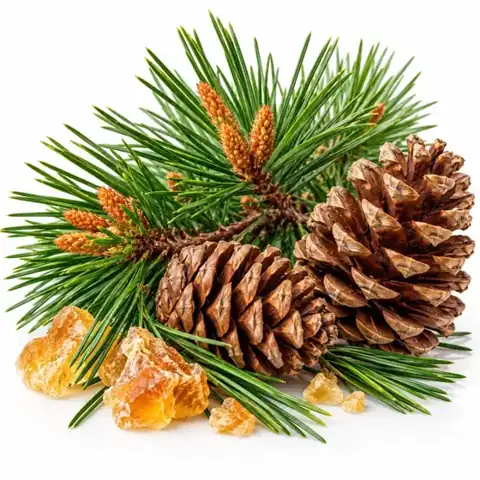
Pines are evergreen conifers of the genus Pinus. Skin care uses two of their products. Resin (Pinus Halepensis Resin) is the sticky, fragrant substance the Aleppo pine exudes when its trunk is tapped, to seal the tree’s wound; it is rich in resin acids and terpenes. The essential oil (Pinus Sylvestris Leaf Oil) is steam-distilled from the needles of the Scots pine and contains alpha-pinene, beta-pinene, limonene and bornyl acetate, which give it the clean, resinous scent of the forest.
What are the benefits of pine?
Pine brings the freshness of the forest into skin care. Applied topically it:
- Scents with a clean, resinous, woody note
- Gives a feeling of freshness and revitalisation
- The resin has a mild astringent action that tones
- Suits normal to oily skin
- Its scent opens up the breath in a hot shower
The tears of Pitys
In Greek mythology the nymph Pitys was turned into a pine to escape Boreas, the north wind, and the drops of resin were her tears. The ancient Greeks sealed their amphorae with resin to keep the wine from spoiling — and so retsina was born. Until a few decades ago resin tapping was a major trade in Evia, Attica and Halkidiki, with tappers scoring the pines by hand every summer.
Where does it come from?
The Aleppo pine is the most widespread pine of the Mediterranean and covers much of Greece’s coastal forests, from Evia to Halkidiki and Crete. The Scots pine grows in the mountains of northern Europe and Asia, and in Greece in the Rhodope and Pieria mountains; its essential oil is produced mainly in Austria, Hungary and Russia.
Products with pine
All our products that contain it, from their ingredient lists.
Showing the single result
Showing the single result