
Lemon verbena
Ingredient
Lemon verbena
Benefits:NaturalPlant
The herb of the Greek balcony: a leaf that, once crushed, smells of lemon more intensely than lemon itself.
What is lemon verbena?
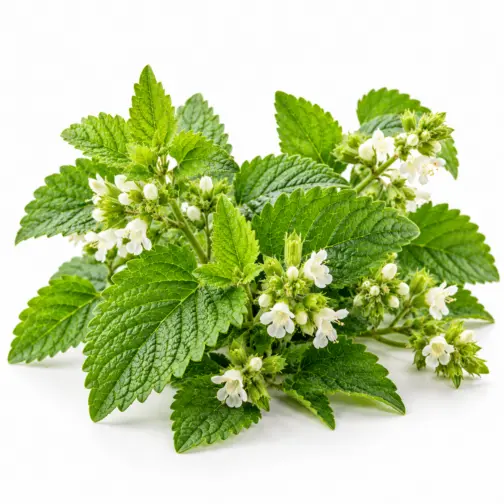
Lemon verbena (Aloysia citrodora, formerly Lippia citriodora) is a deciduous shrub of the verbena family, with narrow, pointed leaves and small white or pale lilac flowers. In Greek it is called “louiza” and in French “verveine”, and it should not be confused either with lemongrass or with common vervain (Verbena officinalis). Its leaves contain an essential oil with citral, limonene, geraniol and 1,8-cineole, as well as verbascoside, a polyphenol with strong antioxidant activity. Cosmetics use the essential oil, the extract and the dried leaves.
What are the benefits of lemon verbena?
Lemon verbena combines the freshness of lemon with a soft, floral sweetness. In skin care:
- Scents with a fresh, lemony-floral note
- Gives a soothing, calming feel
- Has a mild toning action
- Offers verbascoside and flavonoids with antioxidant activity
- Suits every skin type
From the cup to the soap
In Greece lemon verbena is first and foremost a tea: the leaves are picked in summer, dried in the shade and kept for winter evenings. In France verveine is the classic after-dinner tisane and the base of a historic liqueur. The same tradition of calm passed into perfumery and cosmetics, where its scent has been used since the 18th century, when the Spanish brought the plant to Europe from South America.
Where does it come from?
Lemon verbena originates in South America — Argentina, Chile, Peru and Brazil. Today it is grown around the Mediterranean, mainly in France, Spain, Morocco and Greece, where it thrives in almost every garden and flowerpot.
Products with lemon verbena
All our products that contain it, from their ingredient lists.
Showing the single result
Showing the single result