
Silk
Ingredient
Silk
Benefits:NaturalAnimal
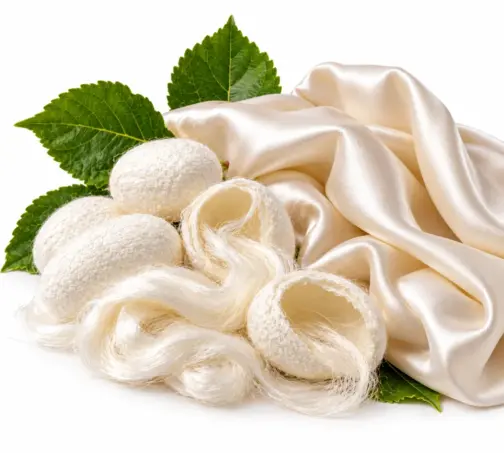
A cocoon made of a single thread up to one and a half kilometres long — and its proteins, which leave the skin feeling like silk fabric.
What is silk?
Silk is made by the silkworm (Bombyx mori), the caterpillar of a moth that feeds only on mulberry leaves. To transform, it spins a cocoon around itself from one continuous thread. The thread consists of two proteins: fibroin, the inner core, and sericin, the “glue” that surrounds it. Cosmetics use hydrolysed silk (Hydrolyzed Silk): the proteins are broken down into small peptides and amino acids, mainly glycine, alanine and serine.
What are the benefits of silk?
Silk proteins are synonymous with softness. Applied topically they:
- Form a fine, invisible film that makes the skin feel velvety
- Hold moisture on the surface of the skin
- Leave the skin smooth and soft to the touch
- Suit dry and mature skin
- Give soap a silkier, richer lather
From China to Soufli
According to legend, the Chinese empress Lei Zu discovered silk around five thousand years ago, when a cocoon fell into her tea and unravelled. China kept the secret for centuries, until in the 6th century two monks smuggled silkworm eggs into Byzantium inside hollow canes. In Greece, Soufli in Evros became the “silk town”, with factories and mulberry trees that survive to this day.
Where does it come from?
Today over 80% of the world’s silk is produced in China and India, followed by Uzbekistan, Brazil and Thailand. Hydrolysed silk for cosmetics is made mainly from by-products of the silk textile industry.
Products with silk
All our products that contain it, from their ingredient lists.
Showing the single result
Showing the single result