
Sage
Ingredient
Sage
Benefits:NaturalPlant
Salvia, from the Latin salvare, “to save”: the herb the ancients considered almost a cure-all, and one that Greece still drinks every winter.
What is sage?
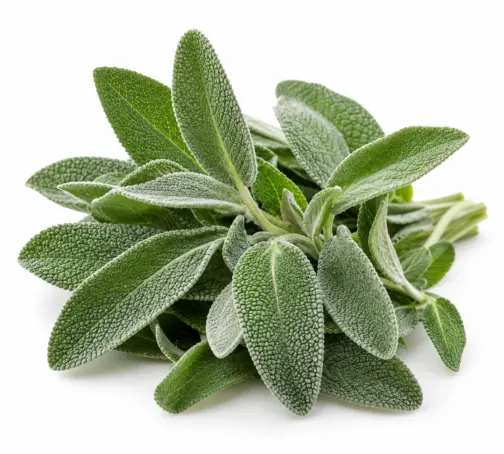
Sage (Salvia officinalis) is a perennial, semi-shrubby herb of the mint family, with downy grey-green leaves and purple flowers. Greece also has Greek sage (Salvia fruticosa), which gives the familiar herbal tea. The essential oil, distilled from the leaves, contains thujone, camphor, 1,8-cineole and borneol. The leaves are rich in rosmarinic and carnosic acid, flavonoids and ursolic acid, which give them their antioxidant and astringent action. Cosmetics use the essential oil, the extract and the dried leaves.
What are the benefits of sage?
Sage is the herb of balance for skin and scalp with a tendency to oiliness. Applied topically it:
- Has an astringent action that gives a feeling of cleanliness
- Helps balance oiliness of the scalp
- Offers polyphenols with antioxidant activity
- Has a cool, toning feel
- Scents with a warm, herbaceous, slightly bitter note
From the monastery pharmacy
“Why should a man die who has sage in his garden?” asked a medieval proverb of the Salerno school of medicine. The Romans harvested it with ceremony, medieval monks grew it in every physic garden, and 17th-century Chinese merchants traded the Dutch three chests of tea for one chest of sage. In Greece its infusion is the classic winter drink, and a sage rinse an old recipe for dark hair.
Where does it come from?
Sage is native to the northern Mediterranean — the Balkans, Italy, the Adriatic. The essential oil is produced mainly in Dalmatia (Croatia), Albania and Spain, while Greek sage is gathered wild in Crete, the Peloponnese and the Aegean islands.
Products with sage
All our products that contain it, from their ingredient lists.
Showing the single result

Showing the single result