
Activated charcoal
Ingredient
Activated charcoal
Benefits:NaturalPlant
A single gram has an inner surface the size of a tennis court — which is why activated charcoal is one of the most absorbent materials in nature.
What is activated charcoal?
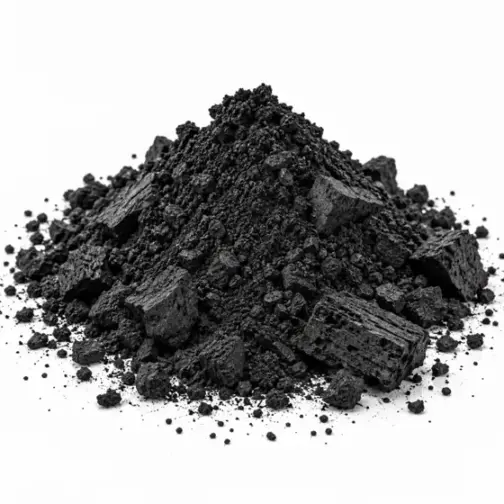
Activated charcoal is carbon of plant origin — usually from coconut shells, wood or bamboo — that has been “activated” by heating it to a very high temperature in the presence of steam. The process opens up a dense network of tiny pores inside it, giving it an enormous inner surface: 500 to 1,500 square metres per gram. In cosmetics it is listed as Charcoal Powder and gives products their characteristic deep black colour.
What are the benefits of activated charcoal?
Activated charcoal works by adsorption: substances cling to the surface of its pores. In rinse-off products it:
- Binds excess oil and impurities on the surface of the skin
- Gives a feeling of deep cleansing
- Suits skin and scalp with a tendency to oiliness
- Helps the skin look more matte
- Has a gently exfoliating texture
From water filters to the bathroom
The ancient Egyptians and Phoenicians stored drinking water in charred barrels to keep it clean, and Hippocrates describes the use of charcoal. Today activated charcoal is the key material in water and air filters, protective masks and deodorisers. In skin care it became popular in the 2010s, with black soaps, masks and toothpastes — and it shares the same principle with zeolite: a porous structure that holds on to what we don’t want on the surface.
Where does it come from?
Cosmetic activated charcoal is produced mainly from coconut shells in Sri Lanka, the Philippines, Indonesia and India, and from bamboo in Japan and China, where “binchotan” has been a traditional material for centuries.
Products with activated charcoal
All our products that contain it, from their ingredient lists.
Showing the single result
Showing the single result