


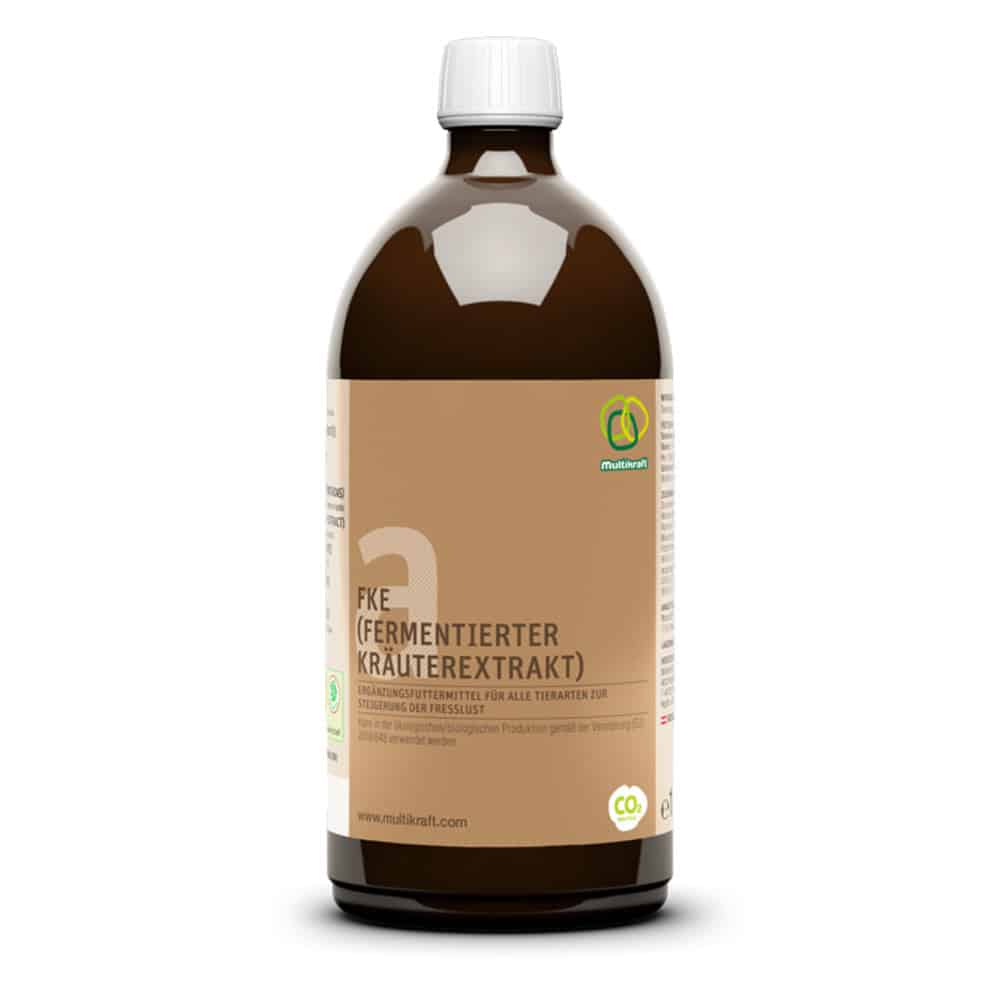
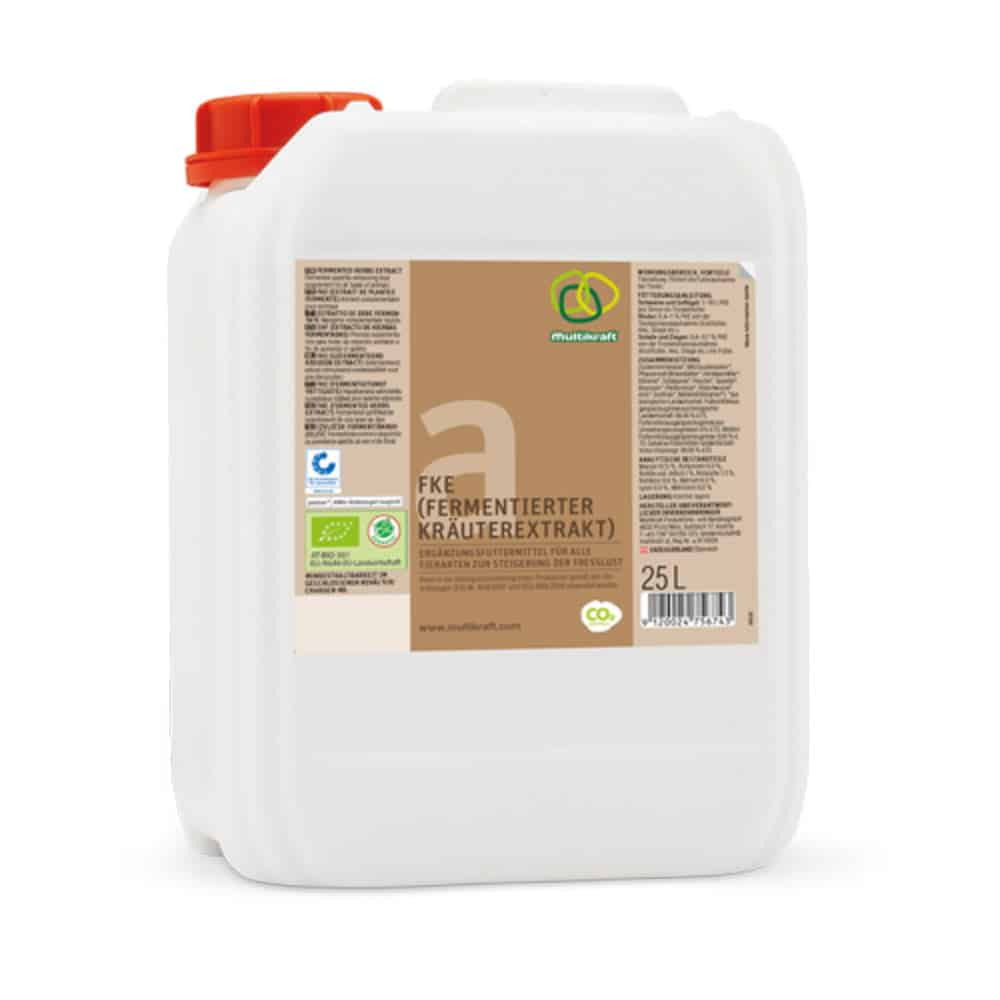
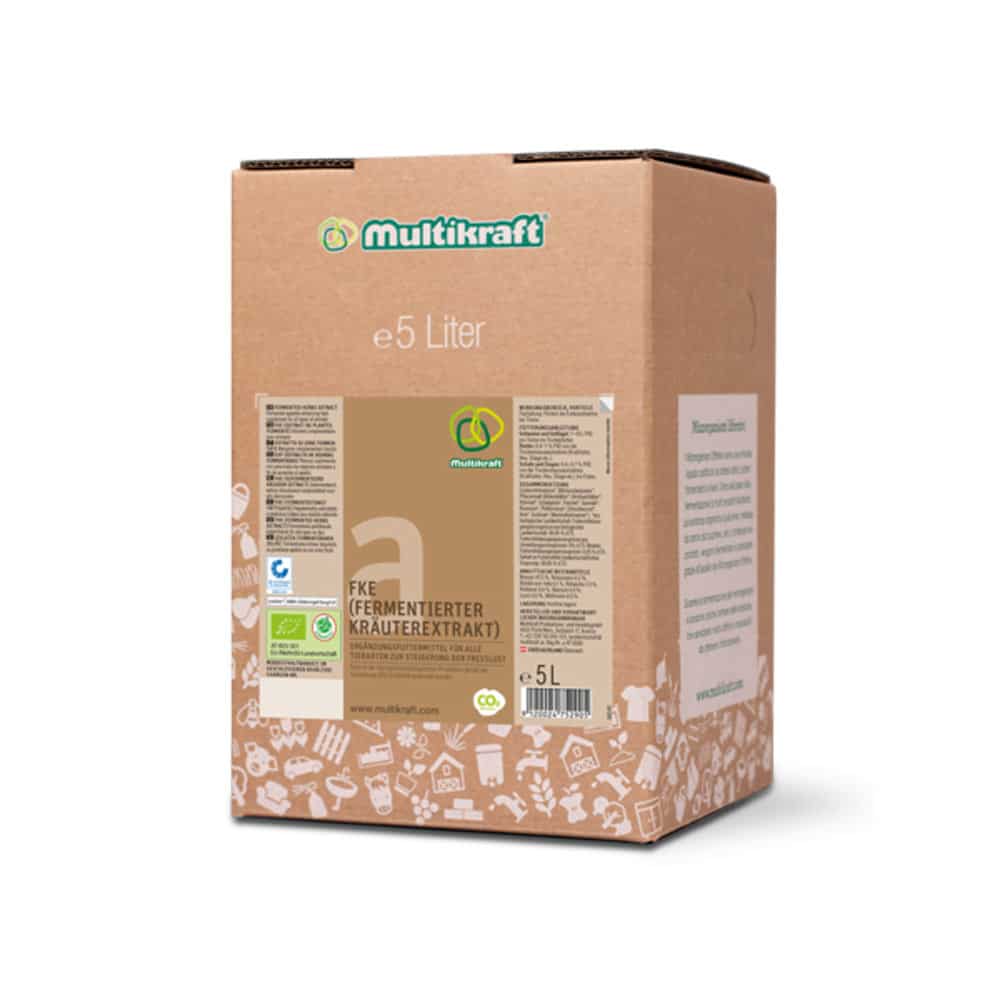
A liquid dietary supplement containing Multikraft® active microorganisms and herbal extracts. It contains a high concentration of natural antioxidants that help improve the animal’s well-being and maintain its health.
Its composition is based primarily on lactobacilli and yeast, sugar cane molasses and organic dairy products, as well as herbal extracts resulting from the anaerobic fermentation of the EMs together with selected organically grown herbs (cumin, anise, fennel, rosemary, birch leaves, goldenrod, mint, mallow root, raspberry leaves, and milk thistle seeds).
It can be used as a supplement in food and water, as well as a natural disinfectant. It provides the body with nutrients and other beneficial bioactive substances, such as enzymes, plant-based antibiotics, and more. It has a sweet-sour odor, a yellowish-brown color, and a pH of 3.4–3.6.
It remains usable for about a year without losing its properties, provided it is stored in a cool, dark place.
This is a completely natural product, the effectiveness of which has already been documented by numerous university studies worldwide. It is internationally recognized and certified as a feed supplement.
It is very easy to use and purely preventive. It can be applied in two ways:
- Spraying the food.
- By adding it to the water they drink.
It is listed in the InfoXgen directory of resources for organic farming and may be used in organic production in accordance with Regulations (EC) No. 834/2007 and (EC) No. 889/2008. Control body: AT-BIO-301
DOSAGE
Silage in grass or hay: 1 L FKE per m³. Silage in corn: 2 L FKE per m³
Cattle: Dairy feeding:
Upon introduction of EM technology, 150 ml of FKE per cow per day for one month.
Thereafter: 75 ml FKE per cow per day.
Feeding of young cows: During the 1st month, 75 ml of FKE per animal per day; thereafter: 45 ml of FKE. Feeding calves from the day of birth and for one month: 50 ml FKE per meal.
Pigs (fattening and breeding): In feed: 7 liters of FKE per ton.
In drinking water: 3 liters of FKE per ton
Poultry: 3 liters of FKE per 1,000 chicks. Then on the 2nd, 3rd & 8th day with 2.5 liters of FKE per 1,000 birds. Feeding chickens with feed flour: Upon introduction to EM technology for at least 2 weeks, 7–10 liters per ton. Subsequently, 5–7 liters per ton of feed. In drinking water, 3 liters of FKE per 1,000 birds
Sheep and goats: In feed: 0.4–0.7% FKE via dry feed.
Sheep- Goat weighing approximately 60–70 kg 30 ml FKE per day
Horse: 50 ml FKE per day (via concentrated feed), starting from the 3rd month of life. In stressful situations (transport, competitions, foaling, etc.), 100 ml FKE per day. If stressful situations are expected, administer 2–3 times earlier. For foals, 15 ml after consuming colostrum, directly into the mouth.
Birds (canaries, parrots, pigeons) This product has a wide range of applications in bird husbandry. It can be used as a supplement in feed and water, but also as a biological disinfectant! It provides birds’ bodies with nutrients and other beneficial bioactive substances, such as enzymes, plant-based antibiotics, etc. At the same time, it can be used as a spray for the hygiene and disinfection of breeding areas, cages, equipment, drinking water, the birds themselves, eggs, etc., It increases the birds’ resistance to disease, appetite, and feed metabolism, as well as reproduction and chick viability, etc., without the need for disinfectants or antibiotics. It remains active and usable for more than a year without losing its properties.
Applications & Dosage It is very easy to apply and is purely preventive. It can be applied in two ways: 1st By spraying the feed. (egg feed, greens, chick feed, etc.) 2nd By adding it daily to their drinking water. To improve water quality, add EM ceramics. Dosage: 2–3 ml of extract (FKE) per liter of water is sufficient, daily or at least 3 times a week, 3–5 ml per liter of water; there is no risk of overdose, and 2–3 ml per kilogram in the feed mixture. For pigeons and parrots: 3–5 ml per 1 kg of food. During periods of stress (breeding, first week of chicks, quarantine, illness, after medication, etc.): 3–5 ml per liter of water. In their bath water (3–5 drops per 100 ml of water), or 4 ml per 1 liter. Any leftover water from the waterers, if refreshed daily, can be used to spray the bedding or added to their bath.
When diluted with water, it is recommended to use it within 1–2 days. For the hygiene of breeding facilities, equipment, etc. with FKE or EM Active
The nesting material, eggs, and chicks can be misted 2–3 times while they are in the nest.
We spray the birds themselves or parts of their bodies.
For disinfecting and controlling odors in livestock housing. Spray to reduce odors and to disinfect the pens. Initially, spray every other day and later once a week on the surrounding rearing area (air, walls, floors, etc.), the cages, the droppings, and the accessories (straws, feeders, etc.) diluted to 0.2%.
To disinfect wounds or treat localized infections caused by bacteria, you can spray or soak the affected area with undiluted or diluted FKE.
To disinfect the eggs by briefly immersing them in undiluted or diluted FKE and allowing them to air dry.

Reviews
There are no reviews yet.